



February 2, 2022

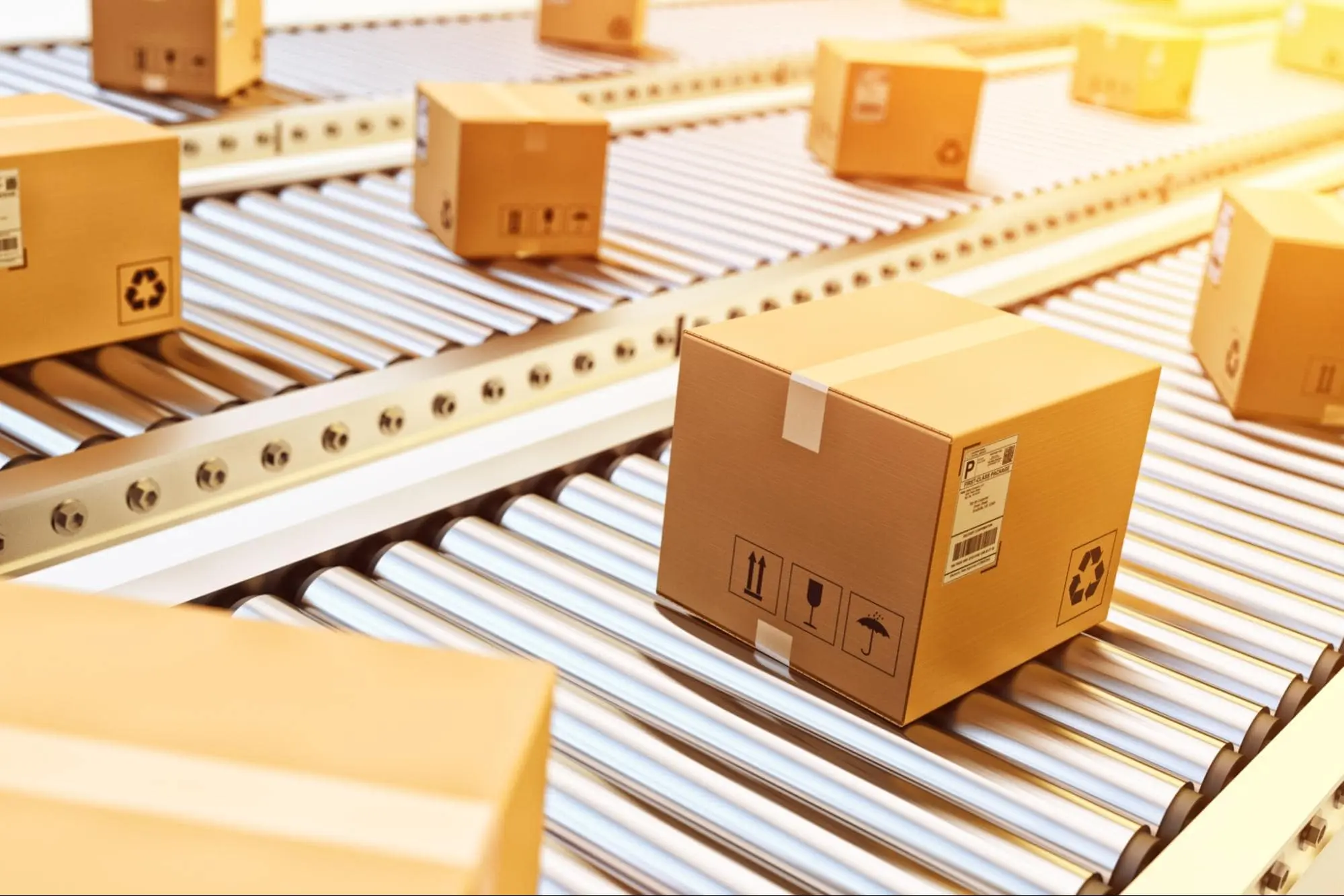
Shipping fees are one of the biggest expenses that cut into a business’s profit margins, especially for eCommerce sellers. To make matters more difficult, shipping carriers threw another wrench in retailers’ freight calculations in 2007 with the introduction of dimensional weight pricing. To help you cut costs on shipping and better understand the fulfillment process, we’ll explore how to calculate dimensional weight, what it is, and how to operate your fulfillment strategy in the most cost-effective way possible.
 Update: Starting August 18, 2025, FedEx and UPS will round every fractional inch up when measuring length, width, and height for dimensional (DIM) weight. Example: 11.1″ becomes 12″; 8.01″ becomes 9″. Read more: FedEx & UPS DIM Rounding Rule (Aug 18, 2025): What’s Changing & How to Cut Costs
What is Dimensional Weight or DIM weight?
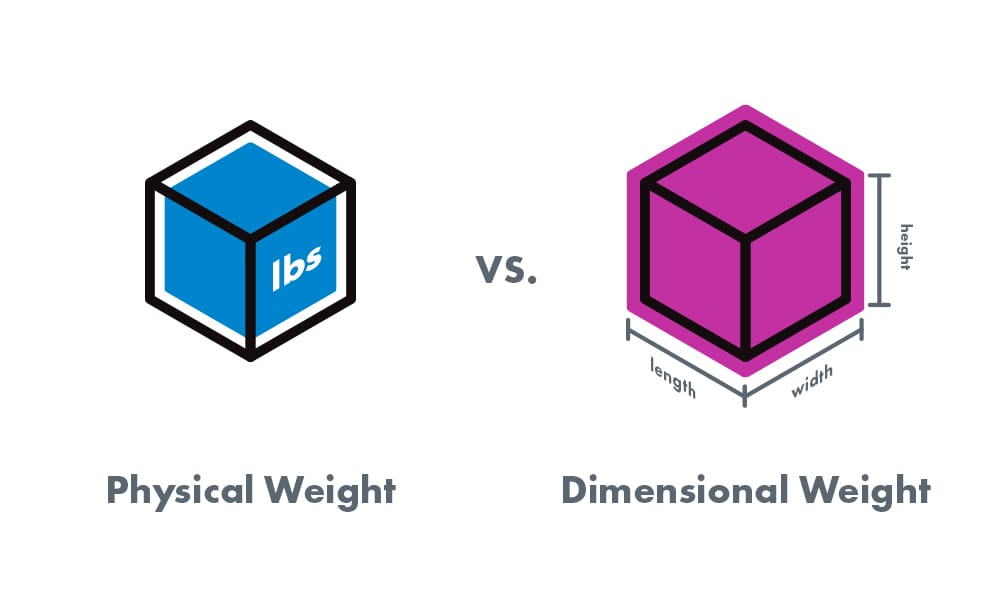
Also known as DIM weight or volumetric weight, the dimensional weight system is a pricing tactic used by shipping carriers and freight companies to ensure they don’t lose money on oversized, lightweight parcels. Essentially, it allows freight carriers to charge shipping fees based on the size of the box, instead of its actual weight.
With limited space on shipping trucks, DIM weight takes the density of the package into account when determining pricing fees. Shipping carriers like UPS, FedEx, and the USPS will charge freight fees based on whichever is greater: the physical weight of the package or the dimensional weight.
A Brief History of Dimensional Weight
Dimensional weight has been around for some time. Carriers like FedEx and UPS have been using a form of dimensional weight pricing for air and international packages, as space on planes is always a premium. Beginning in 2015, major carriers expanded their use of dimensional weight pricing to calculate charges for all packages.
According to carriers, this change is a result of consumer trends. As the eCommerce market continues to grow, major carriers’ truck capacities continue to experience increased strain because more consumers are shopping online than in brick-and-mortar stores.
While many of the items ordered online are lightweight, the total size of the packaging can take up considerable space in trucks (think clothing or shoes), so carriers introduced dimensional weight across all fulfillment.

How to Calculate Dimensional Weight
All carriers follow the same rules when calculating DIM weight: find the package dimensions and divide by the DIM factor. It’s important to remember that dimensional weight is rounded up to the nearest whole number, and the final pricing is calculated by using the height, width, and length from the longest point on each side.
(Package Height x Package Width x Package Length)/DIM Factor = Dimensional Weight
What is the DIM Factor?
The DIM factor is used when carriers are determining how to calculate a package’s dimensional weight. This factor, also known as a DIM divisor, is a number set by carriers that represents cubic inches per pound. UPS and FedEx use a DIM divisor of 139 for daily rates (UPS retail rates use 166). USPS moved from 166 to 139 on July 12, 2026, rounds each side up to the next whole inch, and applies dimensional pricing only to packages larger than 1 cubic foot (1,728 cubic inches).
Let’s say a company is shipping a package via a carrier with the following dimensions:
- Length: 12 inches
- Width: 15 inches
- Height: 7 inches
The first step is to multiply the length, width, and height together to get the cubic size of the package. In the above example, the package would be 1,260 cubic inches (12 inches x 15 inches x 7 inches). The next step is to divide the cubic size by the DIM factor of 139, giving the package a dimensional weight of 10 lbs.
Even if the package weighs 5 lbs., the carrier will use the DIM weight (10 lbs.) to determine the final price. If the package actually weighs 15 lbs., the carrier will use the actual weight. Again, carriers will base their pricing on whichever costs more: the dimensional weight or the actual weight.
Need an easier way to determine how to calculate dimensional weight? FedEx has a dimensional weight calculator to help you easily determine a package’s final volumetric weight.
How Dimensional Weight Affects Freight Rates
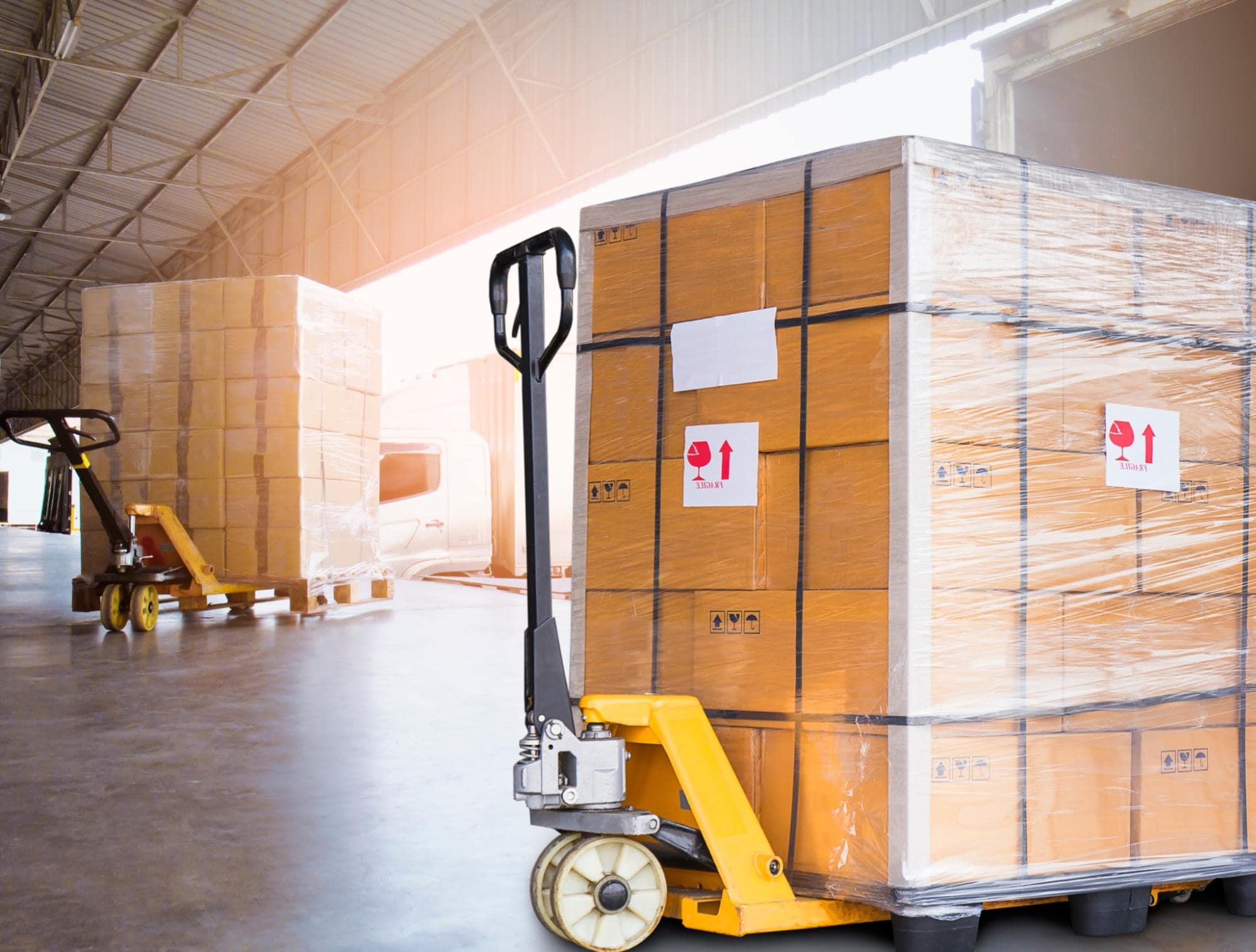
Think of shipping a bowling ball. The package is small but heavy, and the actual weight is likely to exceed the dimensional weight. In this case, the carrier will base the final price on the actual weight of the product.
However, if you think about a retailer shipping a large but lightweight product – such as a bulky winter jacket – the dimensional weight is likely to exceed the actual weight, so a carrier will base pricing on the dimensional weight.
Tips on Reducing the Impact of Dimensional Weight Pricing
If you’re a business handling its own fulfillment, you know the impact shipping weight costs have on profit margins. To help you cut costs and save wherever possible, we’ve compiled some helpful tips on reducing the impact of dimensional weight pricing below:
- Flat rate shipping. Some carriers offer shipping options that help standardize the overall process. Flat rate shipping doesn’t charge you for the size, weight, or distance a package must travel, so long as it fits in the designated box or envelope provided by the carrier. USPS and FedEx are the two major carriers offering flat rate options.
- Buy in bulk. Since shipping involves a lot of supplies (boxes and envelopes of all sizes, bubble wrap, tape, labels, etc.), buying the necessary shipping materials in bulk can save you a lot of money in the long run.
- Compare costs. For products that need their own branded packaging, or if you’re unable to use flat rate packaging, comparing shipping costs is your next best option. Each major carrier has a shipping weight rate calculator, and it’s a good idea to periodically check rates to make sure your business is getting the best deal. USPS, UPS, and FedEx all have shipping calculators available.
Reduce Shipping Fees with Right-Size Packaging
One common mistake many businesses make when shipping products is choosing boxes and shipping materials too large for the product they’re shipping.
To avoid shipping fees negatively affecting your profit margins, focus on right-size packaging. Below are a few tips on how you can reduce shipping costs by using right-size packaging:
- Choose packaging that matches the size and fragility of your product.
- Bring your product to a carrier, where they can help you assess the right-size packaging for your item.
- Explore other shipping options, like padded poly mailers.
Right-size packaging is helpful when looking to reduce shipping costs, but it’s not the most sustainable option for a business moving a lot of inventory. Plus, while you may be able to negotiate shipping costs with carriers to save you some money on shipping, handling your own fulfillment is often more costly than anticipated. Oftentimes, partnering with a third-party logistics company (3PL) for fulfillment is a better solution because your partner has access to much better rates.
How a 3PL Logistics Company Can Help
Shipping costs shouldn’t have to ruin a company’s margins, even if the products they ship are large and require extra packaging. A 3PL can help lower your cost per shipment, as their shipping rates are driven by the huge order volume and ongoing relationships established with carriers. A 3PL often has access to better freight rates, as well.
When partnering with a 3PL, these reduced rates are passed on to customers, opening the door to significantly more efficient and effective shipping.
At Jay Group, we’re well-versed in securing the best shipping rates possible for the businesses we partner with. Learn How We Can Help →
More shipping and fulfillment guides are in our resource library.
Frequently Asked Questions
What is dimensional weight?
Dimensional (DIM) weight is a billing weight based on the size of the box, not its actual weight. Carriers calculate both and charge whichever is higher, so a large, light box can cost as much as a heavy one.
How do you calculate dimensional weight?
Measure length, width and height in inches, round each up to the next whole inch, multiply them, then divide by the carrier’s DIM divisor and round up to the next pound. Example: a 12 x 15 x 7 inch box is 1,260 cubic inches; 1,260 ÷ 139 = 9.06, billed as 10 pounds.
What DIM divisor do UPS, FedEx and USPS use?
UPS and FedEx use 139 for daily rates (UPS retail rates use 166). USPS switched from 166 to 139 on July 12, 2026, and applies DIM pricing only to packages over 1 cubic foot. Contract rates can use a higher, cheaper divisor.
How can I reduce dimensional weight charges?
Use the smallest box or mailer that protects the product, avoid void fill where you can, and choose packaging by order rather than one box for everything. A 3PL can also negotiate DIM divisors with carriers.
Want to know what this means for your products? See how Jay Group pricing works, or browse more shipping and cost guides.
Not Sure Your 3PL Is the Right Fit?
Meet with Natalia Golenkova - Director of Marketing at Jay Group


Contact Us
Fulfillment decisions shouldn’t be based on assumptions. Let’s talk through your challenges & have a straightforward conversation about whether Jay Group is the right fit for your business right now – no pressure, just clarity.