



November 13, 2019


Updated November 2026 with current USPS, UPS and FedEx rules.
Shipping large and heavy products can cost brands a pretty penny. From challenges picking, packing, and storing the products in a warehouse to extra surcharges shipping large packages, the fulfillment of oversized products comes with many hardships. So needless to say, the larger the package a brand needs to ship, the larger the headache they’ll likely have.
There is no uniform definition of an oversized package. In order to avoid oversized fees, we first must understand how to calculate the weight of a package and what each carrier considers “oversized.”
How Weight Affects Oversized Packages
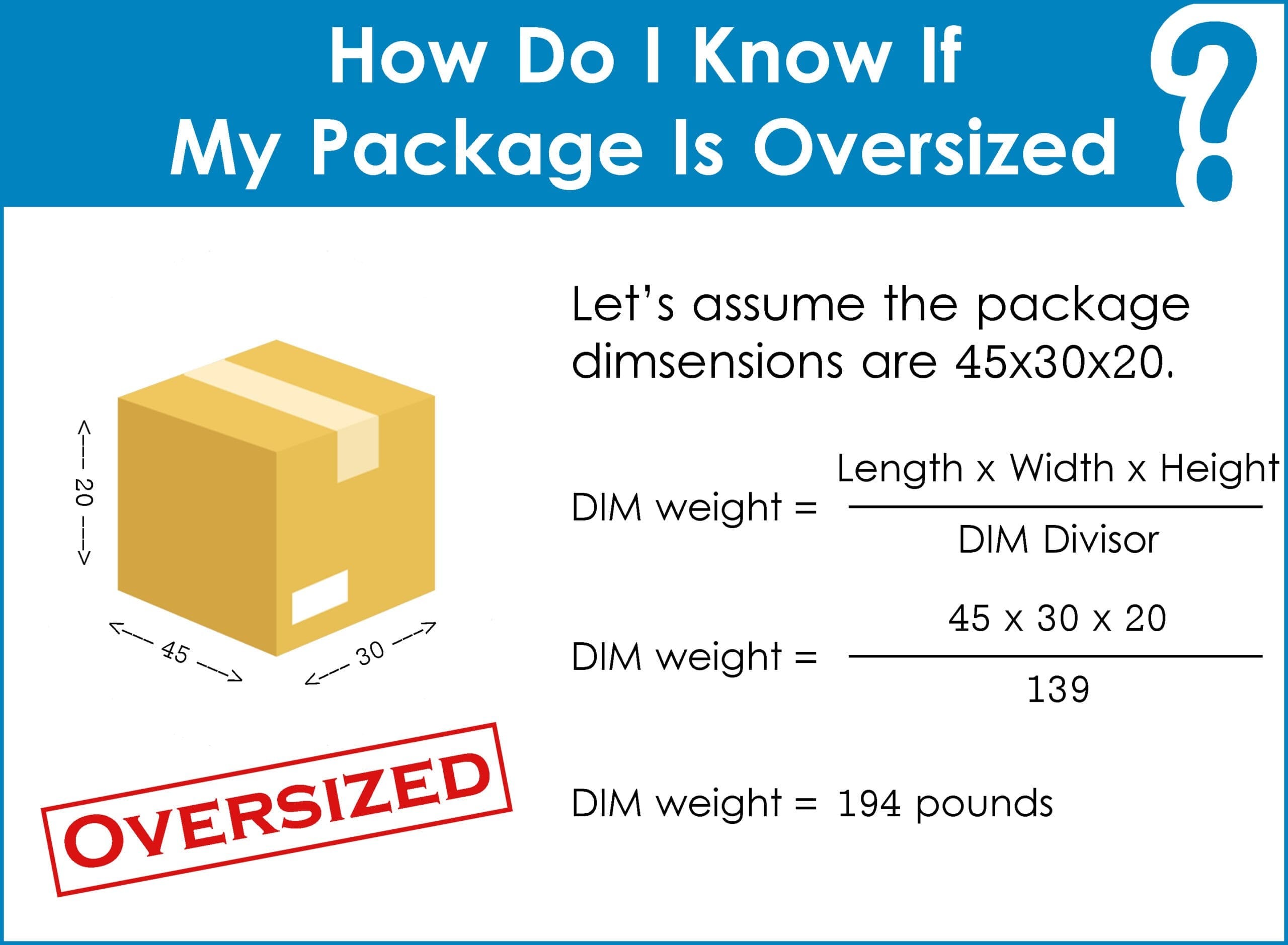
If someone is shipping a large but lightweight package that does not guarantee that their package won’t be classified as oversized. Carriers take into account the density of a package when determining pricing fees, rather than just the physical weight. They do this by determining the Dimensional Weight of the parcel. Their fees are then based on whichever is greater: the physical weight or the dimensional weight.
Dimensional weight is calculated by finding the package dimensions and dividing by the DIM Divisor.
How Do Carriers Define A Package As Oversized?
As a general rule of thumb, if your package has a DIM weight of over 150 pounds, any carrier will classify it as oversized.

That being said, each carrier has their own set of rules that determine if a package is oversized and by how much extra a brand will have to pay. Weight of the package and size of the box influence the cost, but each carrier has their own unique way of dealing with oversized packages.
USPS Oversized Package Guidelines
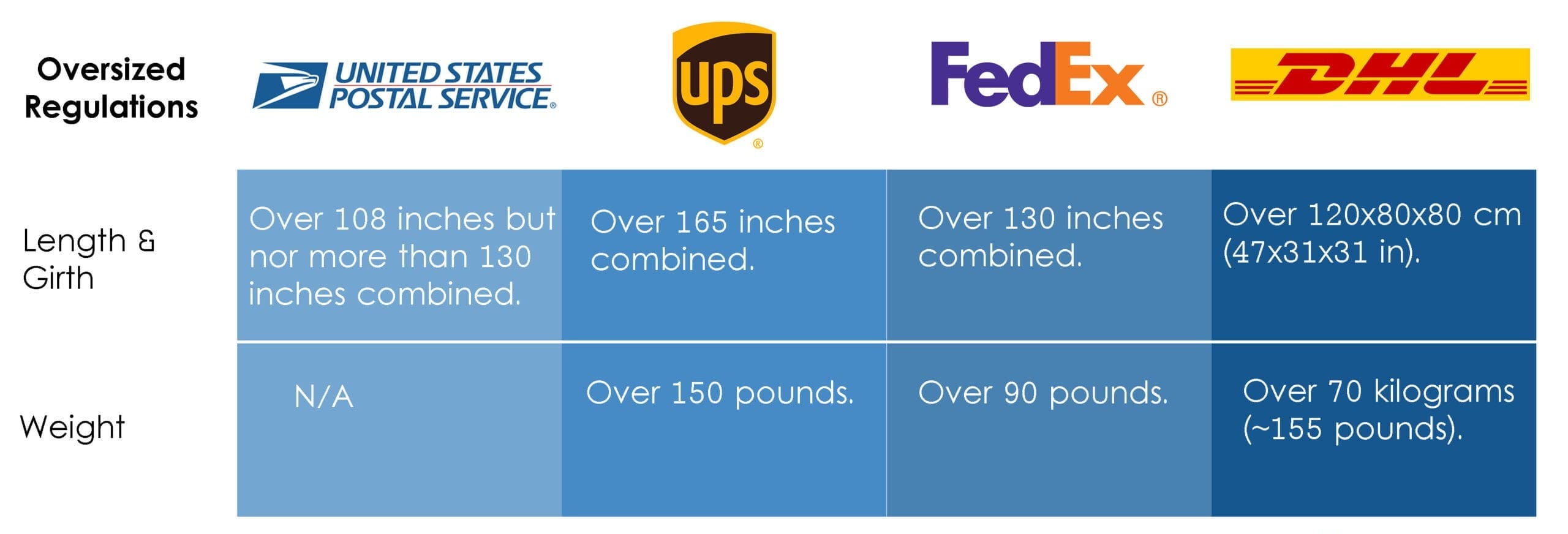
USPS Ground Advantage, which replaced First-Class Package Service, Retail Ground and Parcel Select Ground in July 2023, accepts packages up to 70 pounds and 130 inches in combined length and girth. Packages larger than that can’t ship with USPS and need UPS, FedEx or freight.
Since July 12, 2026, USPS bills packages larger than 1 cubic foot (1,728 cubic inches) by dimensional weight, using a divisor of 139 and rounding each side up to the next whole inch. It also adds nonstandard fees for long or bulky packages: $4.50 for packages 22 to 30 inches long, $10.00 for packages over 30 inches long, and $21.00 for packages over 2 cubic feet, according to the USPS Ground Advantage page (November 2026).
UPS Oversized Package Guidelines
UPS allows shippers to ship large packages through their small package delivery network if they are under specific size and weight requirements. UPS considers a domestic package large when
Its length (the longest side of the package) plus girth [(2 x width) + (2 x height)] combined exceeds 130 inches or its length exceeds 96 inches.
UPS considers an international package large when
its length (longest side of the package) plus girth [(2 x width) + (2 x height)] combined exceeds 130 inches.
Large packages will be given a Large Package Surcharge and a minimum billable weight of 90 pounds. Since January 26, 2026, UPS also applies the Large Package Surcharge to packages over 17,280 cubic inches or over 110 pounds actual weight.
UPS does put limitations on shipping large packages via their small package delivery network. If a package is deemed as in the Over Maximum segment, it is unable to be shipped in this method. A package is considered Over Maximum if it:
- Exceeds 150 pounds
- Exceeds 108 inches in length
- Exceeds 165 inches in length & girth
- Has a large size-to-weight ratio.
If a package falls into this bucket, it is subject to an Over Maximum Limit surcharge and to dimensional weight calculations. A shipper can calculate these costs on UPS’s freight site. In order to avoid these surcharges, a brand should ship these Over Maximum sized packages via UPS freight services.
FedEx Oversized Package Guidelines
FedEx considers a package to be oversized when the length is over 96 inches or the length and girth combined is over 130 inches. FedEx will apply its dimensional weight calculation to the package, but the shipper will also be subject to a minimum of 90 pounds billable weight. Packages exceeding these weight and size limitations will still be able to be shipped via US and International ground services and US Express Package; however, they’ll be charged an oversize surcharge per package.
UPS and FedEx also add peak surcharges to oversized packages during the holiday season, usually from October to January. The amounts change every year, so check each carrier’s current surcharge table.
DHL Oversized Package Guidelines
DHL considers a package oversized if it weighs more than 70 kilograms (154.3 pounds) or has a single dimension which is more than 120 centimeters (47.24 inches). In these cases DHL adds an oversize piece surcharge.
While DHL lays out all their size and weight requirements per service on their website, they request companies contact them directly before shipping oversized packages in order to see what is available in a specific location and timeframe.
How Does Being An Oversized Package Affect Shipping?
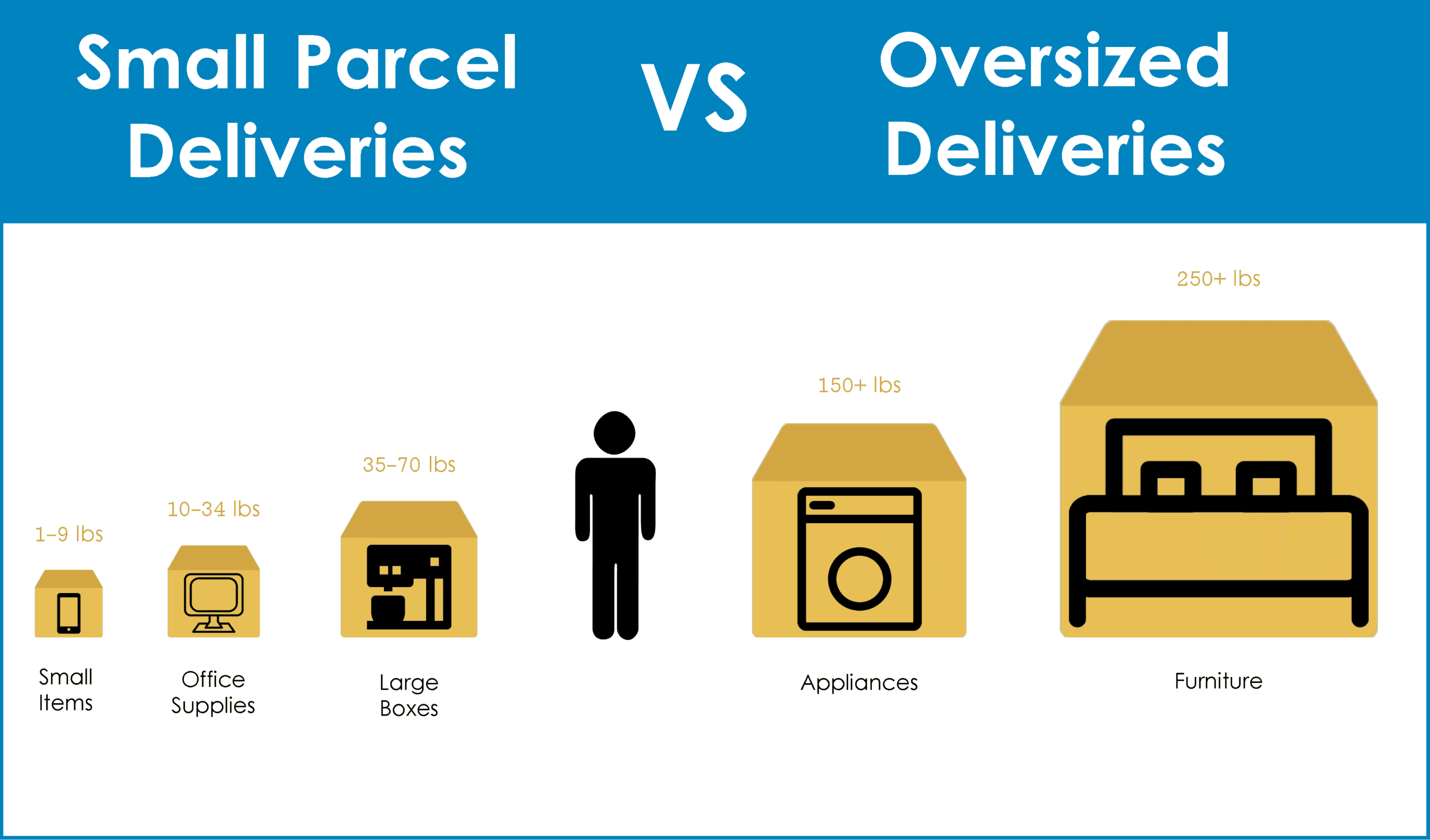
In addition to paying extra charges just to ship an oversized package, these large shipments face more delays and damages during transit than smaller packages. This causes consumers confusion as to why some items (parcel-sized items) arrive at their house quickly and without issue, while oversized goods take longer and can be full of problems. This problem arises from shoppers’ successful interactions with small parcel shipping and their lack of understanding of how the process works to ship oversized products through the logistics system. What both retailers and shoppers can agree on are the three main pain points that occur when shipping oversized parcels:
Oversized Packages Cost More to Ship & Deliver
With oversized surcharges stacking on top of a 90-pound minimum billable weight, it’s no wonder these large parcels cost consumers so much to ship. However, in a survey of 4,700 consumers, 15% decided not to purchase a piece of furniture, an appliance, or an electronic due to the high cost of delivery.
Oversized Packages Are More Often Damaged in Transit
Why does this happen? Well, larger packages are comparatively more difficult to handle, and carriers have to physically handle a brand’s package during transport and delivery. The farther a package has to go, the more hands will touch it, and the more likely it is to take a spill at some point. When a heavier package falls, it has a higher likelihood of damage on impact.
Oversized Packages Experience Delays & Longer Ship Times
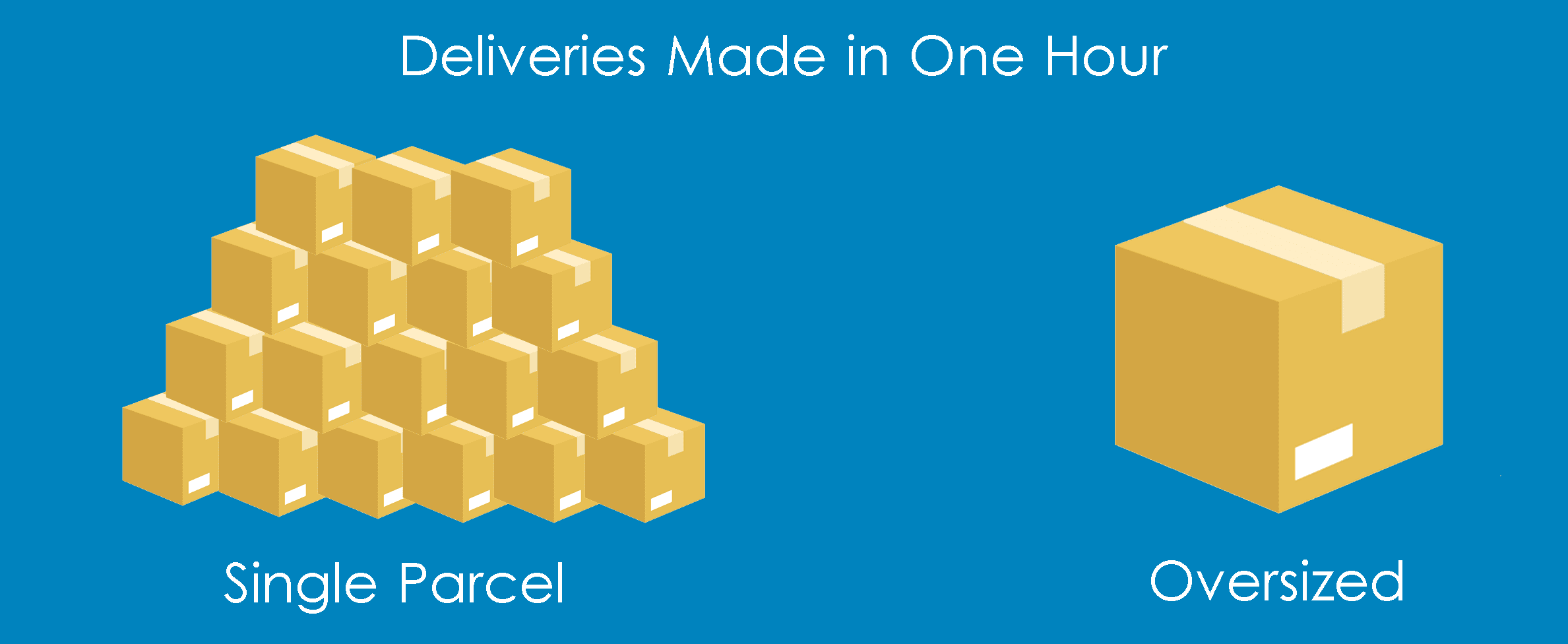
A single parcel driver makes an average of 18 deliveries in one hour, while an over-dimensional delivery team makes an average of 10 deliveries an entire day. The time and space that large packages require eat into carriers’ margins and the ship times they can provide. So when there is limited space to ship out packages, carriers will use every bit of room available to send smaller packages in larger volumes. During the holiday season when carriers ship upwards of three times their normal volume, delays are more likely to occur for this same reason.
What Do I Do If My Package Is Oversized?
If a package is oversized, there are options. But the first question to be asked is “Am I limited by a timeframe too?” If there is flexibility with delivery time, more options for less expensive shipping are available.
Pay the Oversized Surcharge
If a shipper is in a time crunch, they might have to bite the bullet and pay the extra fee. This option is the most expensive as carriers typically charge a hefty oversized surcharge like the large package surcharges UPS and FedEx charge. However, if a company needs to get an oversized package to its destination on time, this is the best way to guarantee the delivery date.
Freight Shipments
Shipping packages via freight instead of parcel is a good way to avoid oversized package surcharges. Freight usually makes sense for shipments over 150 pounds or packages beyond parcel size limits. Freight fees are typically more than parcel, but carriers won’t charge the shipper an oversized surcharge.
However, freight shipping is limited in options for time-specific shipments and delivery typically takes longer.
Ship Multiple Packages

Is the package able to be divvied up into smaller packages? If a brand ships items or parts separately, they’ll pay separate shipping fees, but they’ll avoid oversized surcharges. Typically this option is more expensive than shipping freight, but if a shipper is in a time crunch and money-constrained, this is a good option to ensure a package gets to its destination on time and without the extra fees.
Partner With A Third-Party Logistics Provider
A 3PL, a Third-Party Logistics Provider, can be a big benefit if a brand’s product is large and oversized. 3PLs, with their established carrier network and economies of scale, can provide discounted freight rates and DIM divisors. They are often able to help with freight rate shopping to allow brands to automatically select the fastest shipping method for the least cost based on size, weight, and timeframe requirements.
How 3PLs Will Lower The Cost Of Shipping Oversized Packages
Many growing businesses outsource their fulfillment to a 3PL. Complex shipments, including oversized shipments, can be made simple by relying on a 3PL. From offering discounted freight rates to taking advantage of a 3PL’s multiple warehouse locations, brands with oversized packages can reduce their shipping costs and improve shipment speed.
Discounted Freight Rates
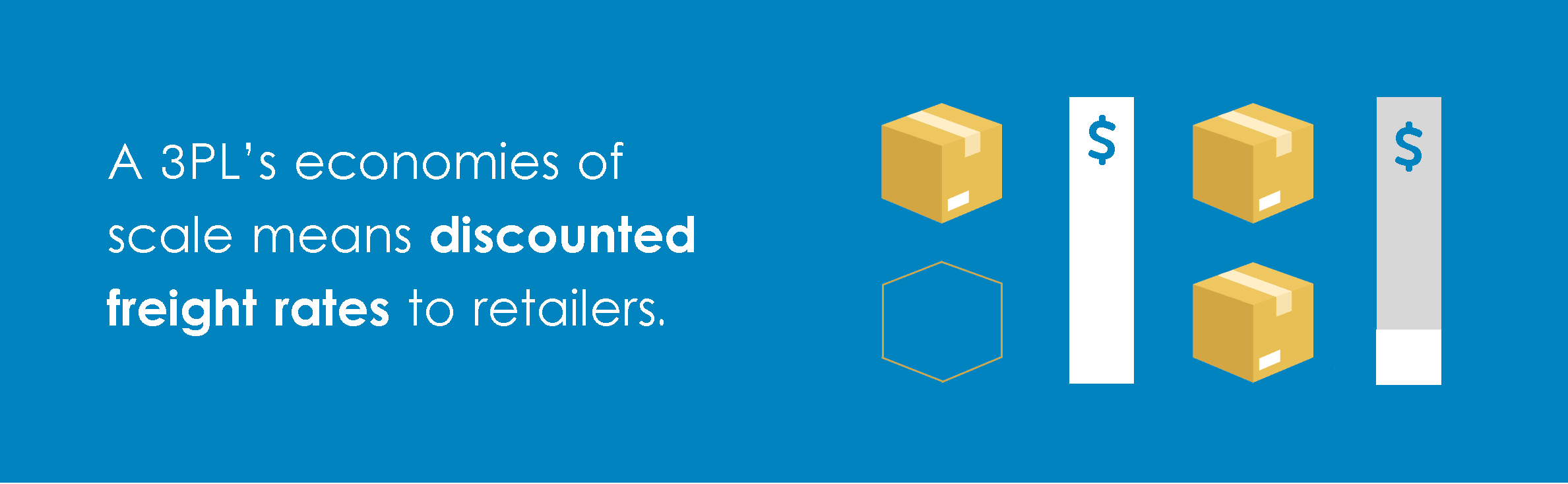
Carriers like UPS and FedEx will give 3PLs discounted freight rates due to their large volume of shipments. If a 3PL ships a large number of oversized packages, carriers will give them additional discounts such as special DIM divisors. The larger the 3PL a brand partners with, the better discounts they’ll have access to.
Multiple Warehouse Locations
Multiple fulfillment centers reduce the number of shipping zones and ultimately the distance a package needs to travel. A 3PL will ship from the warehouse closest to the end location, which can save brands on overall shipping costs for both large and small packages. This can be a relief for retailers since, unless they’re a retail mammoth, building warehouses throughout the U.S. is not always feasible.
Automated Freight Rate Shopping
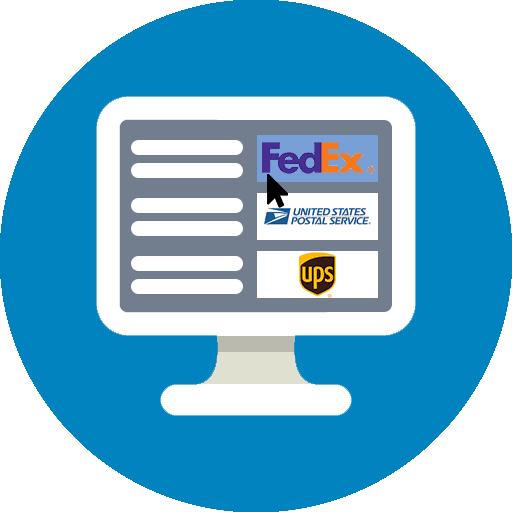
3PLs often have technology in place that will allow shipments to automatically select the best shipping method based upon size, weight, location, and timeframe requirements. This technology looks across multiple carriers and eliminates the need to manually compare UPS vs FedEx vs USPS costs.
Conclusion
Shipping big boxes comes with challenges and expenses. They’re difficult to pack, hard to store, and expensive to ship. But shipping costs don’t have to eat into a brand’s margins. Familiarize yourself with each carrier’s shipping guidelines, look to ship via freight or ship multiple boxes instead, or outsource your fulfillment to a Third-Party Logistics Provider to automate these processes for you.
Thinking about outsourcing fulfillment services? Learn how our facilities and partner network can help you meet customers’ expectations. Contact the Experts →
More shipping and fulfillment guides are in our resource library.
Frequently Asked Questions
What is considered an oversized package?
UPS and FedEx add a large package surcharge when the longest side is over 96 inches or length plus girth is over 130 inches. Since January 26, 2026, UPS also applies it above 17,280 cubic inches or 110 pounds. Packages over 150 pounds, 108 inches long or 165 inches in length plus girth exceed parcel limits and should ship as freight.
How much does it cost to ship an oversized package?
Oversized parcels are billed at a minimum of 90 pounds with UPS and FedEx, plus a large package surcharge that rises again during peak season. The total depends on the carrier, zone, residential delivery and your negotiated rates, so check each carrier’s current surcharge table before you price large items.
What is the cheapest way to ship oversized packages?
Shrink the box first: right-sized packaging can drop a package under the surcharge limits. If it can’t, compare splitting the item into several boxes, LTL freight for heavy items, and shipping from a warehouse closer to the customer to cut the zone. A 3PL with high volume can also negotiate lower surcharges.
How do companies offer free shipping on heavy items?
Most build part of the shipping cost into the product price, set a free-shipping threshold, and ship from the warehouse nearest the customer. Negotiated carrier rates and freight consolidation lower the real cost further.
Not Sure Your 3PL Is the Right Fit?
Meet with Natalia Golenkova - Director of Marketing at Jay Group


Contact Us
Fulfillment decisions shouldn’t be based on assumptions. Let’s talk through your challenges & have a straightforward conversation about whether Jay Group is the right fit for your business right now – no pressure, just clarity.