



April 1, 2022


Supply chain outsourcing means handing parts of your supply chain, such as warehousing, order fulfillment, transportation, returns and even inventory planning, to a specialist partner instead of running them in-house. For most ecommerce and consumer brands, that partner is a third-party logistics company (3PL).
Done well, outsourcing supply chain management improves service and lowers cost, and gives you a better hedge against disruptions, peak-season spikes and time crunches. Done badly, it hands control of your customer experience to someone who does not share your standards. This guide covers what supply chain outsourcing services include, how outsourcing supply chain planning works, seven reasons brands outsource, the risks, and how to choose the right partner.
Key takeaways
- Supply chain outsourcing can cover execution (warehousing, fulfillment, shipping, returns) and planning (inventory and demand planning, network placement).
- Most brands keep strategy, product, pricing and supplier relationships in-house and outsource the physical operations plus the data that feeds planning.
- The main benefits are focus, lower fixed costs, flexibility and faster delivery from more locations.
- The main risks are loss of control, integration problems and hidden fees. All three are partner-selection problems.
Why Should You Consider Outsourcing Your Supply Chain Management?
Your supply chain is vital to your company’s success. A poorly managed supply chain can result in missed opportunities, like missed or late deliveries, picking and packing issues, or even inventory mishaps like overstocking or stock-outs. A business that isn’t paying close attention to its inventory, technology, data analysis, and operational efficiency is likely losing a lot in recurring revenue.
Since supply chains are essential to the longevity and success of all businesses, optimization can aid in faster production cycles and reduced costs. By outsourcing the logistics and fulfillment process – from supply planning, product planning, demand planning, sales and operations planning, and supply management – a business can better prepare for seasonal trends and unforeseen supply chain issues. All of this frees an organization to focus on what it does best — growing your business.
Thinking about outsourcing fulfillment?
We run warehousing, fulfillment, kitting and returns for brands from four U.S. facilities, with a dedicated account manager for every client. See how our 3PL pricing works.
Which Supply Chain Processes Can You Outsource?
A tech-enabled third-party logistics company (3PL) can help streamline the entire supply chain and manage the entire logistics process on your behalf.
Here is a list of supply chain processes that can be outsourced to a qualified 3PL:
- Order fulfillment
- Warehouse receiving
- Product storage and shipping
- Order management
- Inventory management
- Automated shipping
- Returns management
Supply chain outsourcing services: what each one covers
| Service | What the partner does | Learn more |
|---|---|---|
| Warehousing and distribution | Receives, stores and ships inventory from its facilities | Warehousing |
| Ecommerce and omnichannel fulfillment | Picks, packs and ships DTC, marketplace and retail orders from one inventory pool | Omnichannel fulfillment |
| B2B and retail fulfillment | Ships case and pallet orders to retailers to their routing and labeling rules | Retail fulfillment |
| Inventory management | Tracks stock by SKU, lot and location, and reports what to reorder | Inventory management |
| Kitting and packaging | Builds kits, bundles, subscription boxes and retail-ready packs | Kitting and assembly |
| Transportation and last mile | Rate shops carriers and manages parcel and freight shipping | Last-mile delivery |
| Returns | Receives, inspects and restocks or disposes of returned items | Reverse logistics |
| International inbound | A freight forwarder books ocean or air freight and customs clearance | Freight forwarding explained |
Outsourcing supply chain planning: what you can hand off
Supply chain planning decides how much inventory you need, where it should sit and when to reorder. It has several layers, and you can outsource some without giving up others.
- Demand planning: forecasting how much of each SKU will sell. Your team usually owns the forecast because it knows launches and promotions, but a partner’s order history and sales-velocity reports make it more accurate.
- Inventory planning: setting safety stock, reorder points and the buffer between stages (see decoupling inventory). A 3PL with real-time inventory data can flag low stock, aging stock and lot expirations before they become stockouts or write-offs.
- Network planning: deciding which warehouse holds which inventory so orders ship from the location closest to the customer. This is where a multi-location 3PL adds the most value.
- Supply planning and procurement: placing purchase orders with suppliers. Most brands keep this in-house and use the partner’s receiving and inventory data to time orders.
- Sales and operations planning (S&OP): the regular meeting where sales, marketing and operations agree the plan. Your 3PL should take part with capacity and labor plans for peaks.
The practical split for most brands: keep strategy, the forecast and supplier relationships; outsource execution and the inventory data and alerts that make planning work.
Now that we have a better understanding of why outsourcing fulfillment can help a business and which processes you can outsource, let’s look at seven of the top reasons for outsourcing your supply chain management.

1. Strategic Positioning
A major reason many companies outsource their supply chain management is to position the company more strategically. Outsourcing supply chain services allows you to focus on activities that are core to your business. When you stop worrying about storeroom operations or order management, you can focus on sales and marketing, product development, and other areas that improve your competitive advantage.
In addition to the peace of mind outsourcing fulfillment offers a company, partnering with a 3PL that has multiple locations across the United States better positions a brand to reach a broader demographic. It also helps reduce shipping time, something high on the list of demands as customer expectations continue to evolve.
2. Increased Value
Outsourcing supply chain functions increases value to your customers by allowing your company to become more efficient and nimble in areas like order picking and packing. This allows you to deliver products and services faster and with more accuracy, which cuts down on returns and lost sales from frustrated customers. Streamlined operations allow a business to better meet customer demand, and happy customers are loyal customers.
3. Reduced Operational Cost
Outsourcing supply chain management provides you with greater flexibility in controlling your costs. You can choose a contract that matches the current level of services required by your business. As your business scales up or down, you can adjust the scope of work covered by the contract so you pay only for what you need.
Also, when issues arise in the supply chain process, an outside provider has a vested interest in resolving them as quickly as possible so they don’t impact their profit margin.
4. Improved Ability to Meet Customer Demand
A 3PL with the right systems in place can better help you manage inventory levels, predict demand through sales trends, and respond quickly to customer needs.
Having such functions outsourced to a logistics company reduces the chances of an inefficient supply chain, which can seriously damage customer relations and profitability. The human resources, technology, and effective processes that 3PL suppliers can offer better ensure all supply chain processes go smoothly and efficiently.
5. Flexibility
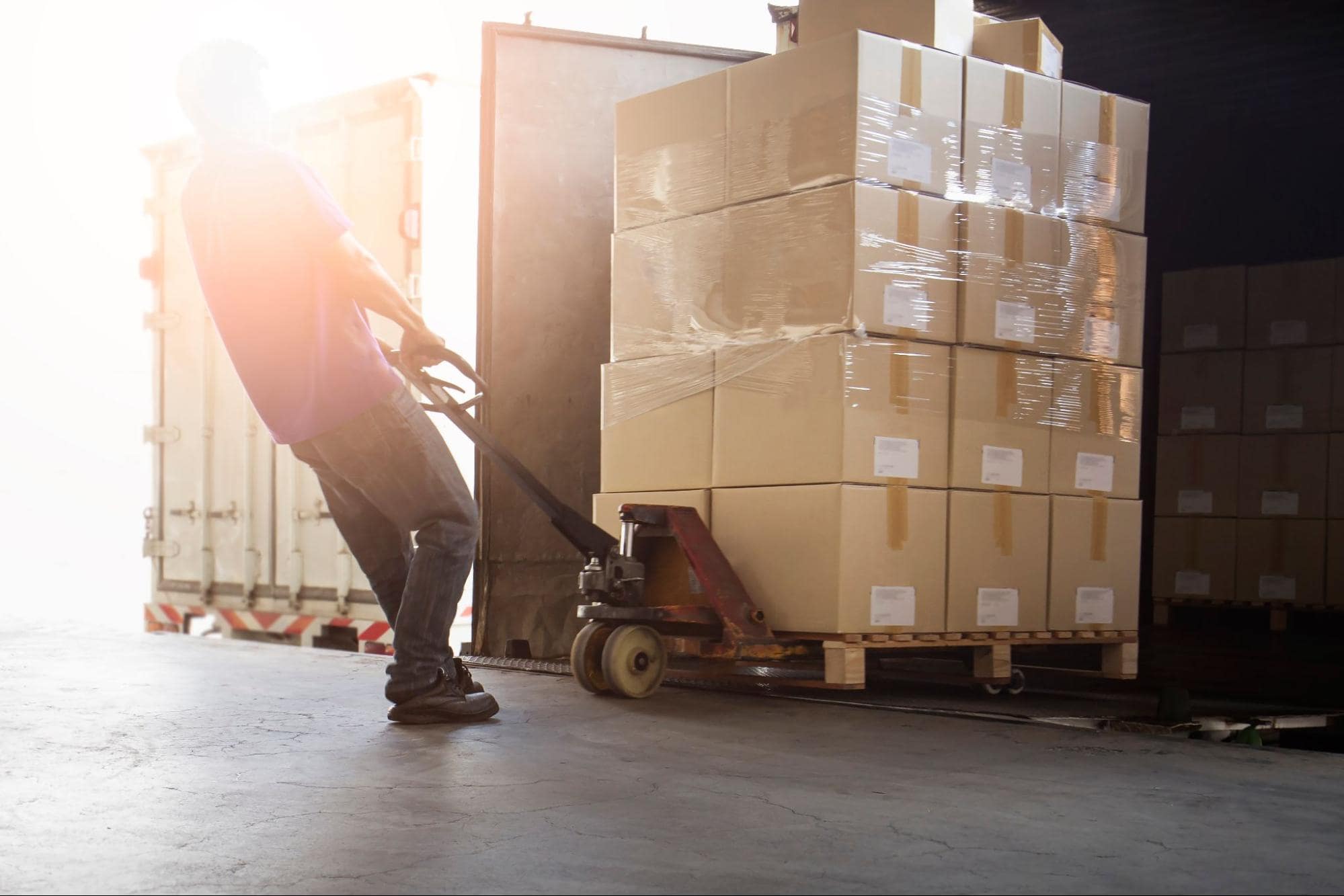
A 3PL offers a high degree of flexibility, as they aren’t limited by fixed assets like warehouses or transportation equipment. Normally, this would require a large capital investment for a business to purchase or lease themselves and would come with a fixed cost regardless of utilization level or fluctuating inventory levels.
6. Increased Working Resources
A 3PL logistics provider allows a company to increase its resources without having to hire additional staff or purchase more equipment at high costs. In fact, some may even specialize in areas where your business lacks expertise, such as warehousing software systems or IT infrastructure management systems.
7. Peace of Mind
Peace of mind is one of the top reasons for outsourcing supply chain management. Knowing you’re partnering with a fulfillment company that’s an expert in supply chain management can help you worry about one less thing. And in a day and age where mental energy can feel scarce, having the clarity and motivation to tackle the day-to-day needs of a business is important and even vital.
What Are the Advantages of Outsourcing Logistics?
A company with an inefficient supply chain will usually find itself inundated with supply chain issues. The problem arises from several factors, including an unprecedented rise in inventory, an increase in orders from customers, evolving consumer demands, last-mile delivery issues, and inefficient replenishment. As a result, such businesses find it difficult to concentrate on core functions, grow their customer base and market share, or increase revenues.
By outsourcing supply chain management to professionals, companies gain several important advantages and are better able to position themselves for growth. With reliable 3PL logistics providers, a business can instead focus on:
- Building better products/services
- Developing new ideas
- Marketing your business
- Strengthening customer relationships
- Implementing future growth strategies

Are There Any Cons to Outsourcing Distribution?
There are plenty of advantages to outsourcing logistics and partnering with a qualified 3PL. But even with the data and real-world experience of companies backing this up, some trepidation on behalf of a business is understandable. This begs the question: are there any cons to outsourcing distribution?
The answer is yes. But only if you partner with a logistics company that is either unqualified, disingenuous, or both. To help you gain an even better idea of what to look for in a 3PL partner, let’s take a look at some of the cons of partnering with a substandard fulfillment company.
Quality Could Suffer
The 3PL you partner with should have extensive knowledge and expertise in your products or services. If not, the quality of your offerings, inventory management, shipping times, and accuracy could suffer.
Cutting corners on logistics will ultimately prove detrimental to your company, and will significantly reduce sales, brand equity, and customer satisfaction.
Less Control Over Distribution
While outsourcing warehousing and distribution may save money, it also means giving up some control over how your goods are handled during shipment and storage. This can be particularly problematic if you have specialized shipping needs or run a business that requires tight control over inventory levels due to the perishable nature of the product. If you’re a business operating in this space, be sure to partner with a 3PL that has certifications in critical business functions, such as PCI certification, DEA, and FDA registrations.
Integration Challenges
If you’re an e-commerce company and your 3PL doesn’t have the proper technology and expertise to fully integrate with your industry and your brand, logistics could turn into a nightmare. To avoid this, be sure the fulfillment agent you partner with is adept at making the customer experience seamless and simple.
Unexpected Costs
Taxes, shipping costs, and hidden fees have the potential to get out of control. Be careful of 3PLs that have hidden costs, as you could get slapped with labeling, picking and packing, and boxing fees you weren’t aware of. In addition to service expertise, transparency is one of the most important traits to look for when partnering with a 3PL.
How to outsource supply chain management in 6 steps
- Map your current supply chain. List every step from supplier to customer, who does it today and what it costs, including labor, space, software and shipping.
- Decide what to keep and what to outsource. Keep what makes you different. Outsource what a specialist does better or cheaper at your volume.
- Collect your data. Order volumes by channel, units per order, SKU count, product sizes, storage needs, seasonality and special handling such as lot control, temperature or hazmat.
- Shortlist and compare partners on the same data, so quotes are comparable. Our guide on how to find a logistics company that fits your brand lists the criteria that matter and the red flags.
- Check the pricing model, especially storage. Cubic-foot and pallet storage billing can produce very different invoices for the same inventory.
- Plan the transition. Agree integration testing, the inventory move, a go-live date outside your peak season, and the KPIs you will review each month.
What to look for in a supply chain outsourcing partner
- Locations: facilities close to your customers cut transit times and shipping zones.
- Compliance: registrations and certifications your products need, such as FDA or DEA registration, lot and expiration tracking, or ISO 27001 for data security.
- Integrations: native connections to your store, marketplaces and EDI for retail partners.
- Transparent pricing: a quote built on your real data, with every fee named.
- Reporting: real-time inventory, order status and KPIs such as accuracy and on-time shipping.
- Capacity: room and labor to handle your peaks and growth.
Understanding the ins and outs of the supply chain process can be complicated. At Jay Group, we leverage our expertise in logistics and fulfillment to help you efficiently and effectively scale your business. Contact us today to see how we may be able to help you.
Supply chain outsourcing FAQ
What is supply chain outsourcing?
It is contracting parts of your supply chain, such as warehousing, fulfillment, transportation, returns or inventory planning, to an outside specialist such as a 3PL instead of running them in-house.
Can you outsource supply chain planning?
Partly. Most brands keep the demand forecast and supplier decisions, and outsource inventory tracking, reorder alerts and network placement to a partner with the data and locations to do it well.
What is the difference between a 3PL and supply chain outsourcing?
A 3PL is one type of supply chain outsourcing partner, focused on warehousing, fulfillment and transportation. Supply chain outsourcing can also include freight forwarding, contract manufacturing and planning services from other providers.
When should a brand outsource its supply chain?
Common triggers are running out of warehouse space or staff, adding sales channels such as Amazon or retail, needing faster delivery across the country, or spending more time on shipping than on growing the business.
Is outsourcing supply chain management cheaper?
Often, because you turn fixed costs for space, staff and equipment into variable costs you pay per order or per unit stored. The answer depends on your volume and product, so compare quotes built on your real data.
Not Sure Your 3PL Is the Right Fit?
Meet with Natalia Golenkova - Director of Marketing at Jay Group


Contact Us
Fulfillment decisions shouldn’t be based on assumptions. Let’s talk through your challenges & have a straightforward conversation about whether Jay Group is the right fit for your business right now – no pressure, just clarity.