
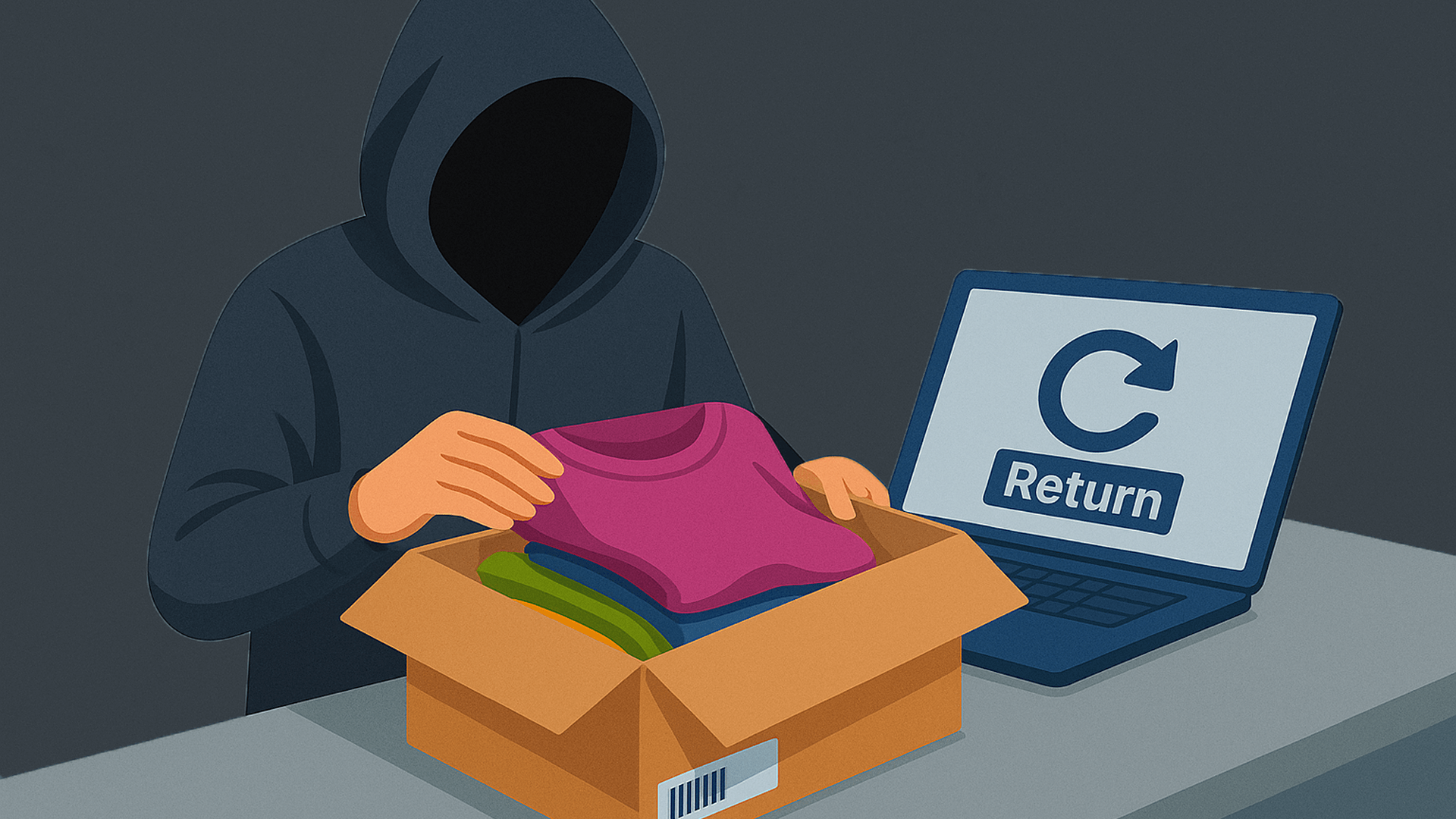
For many brands, the real margin loss doesn’t happen at the checkout—it happens when the product is on its way back. “Free, easy returns” have become table stakes for ecommerce growth, but they’ve also opened the door to a new kind of digital shoplifting: customers (and organized fraudsters) using the return fraud in ecommerce to get refunds, replacements, or store credit they’re not actually entitled to. A normal ecommerce return is straightforward: Customer orders → decides not to keep → follows your policy → sends product back → you inspect → issue a refund, credit, or exchange. Fraudulent returns hijacks that flow. The hardest part? On the surface, a fraudulent return looks almost identical to a legitimate one.
What Are Return Frauds or Fraudulent Returns?
Return fraud or Fraudulent Returns is the intentional misuse of your return, refund, or claims process to gain an unfair benefit—keeping the product while getting money back, returning a different or damaged item, or making false claims about delivery or condition. It includes “item not received” claims that contradict tracking data, wardrobing (wear-and-return), empty or decoy-box returns, and policy abuse that exploits overly generous rules. Statista – backed data cited that 42% of men and 15% of women admitted lying about not receiving an online purchase, and over a third of men and 16% of women admitted falsely claiming that an item arrived damaged. In other words, return fraud is no longer a fringe issue—it’s a mainstream behavior that brands now have to actively manage.
How Big Is the Return Frauds Problem?
Return fraud has grown alongside ecommerce and generous return policies.
Recent data from NRF, Appriss Retail, and other sources shows:
-
U.S. retail returns totaled around $890–$900 billion in 2024, representing roughly 16–17% of sales. National Retail Federation
-
Fraudulent and abusive returns and claims accounted for about $101–$103 billion of those returns—roughly 15% of all returns.
-
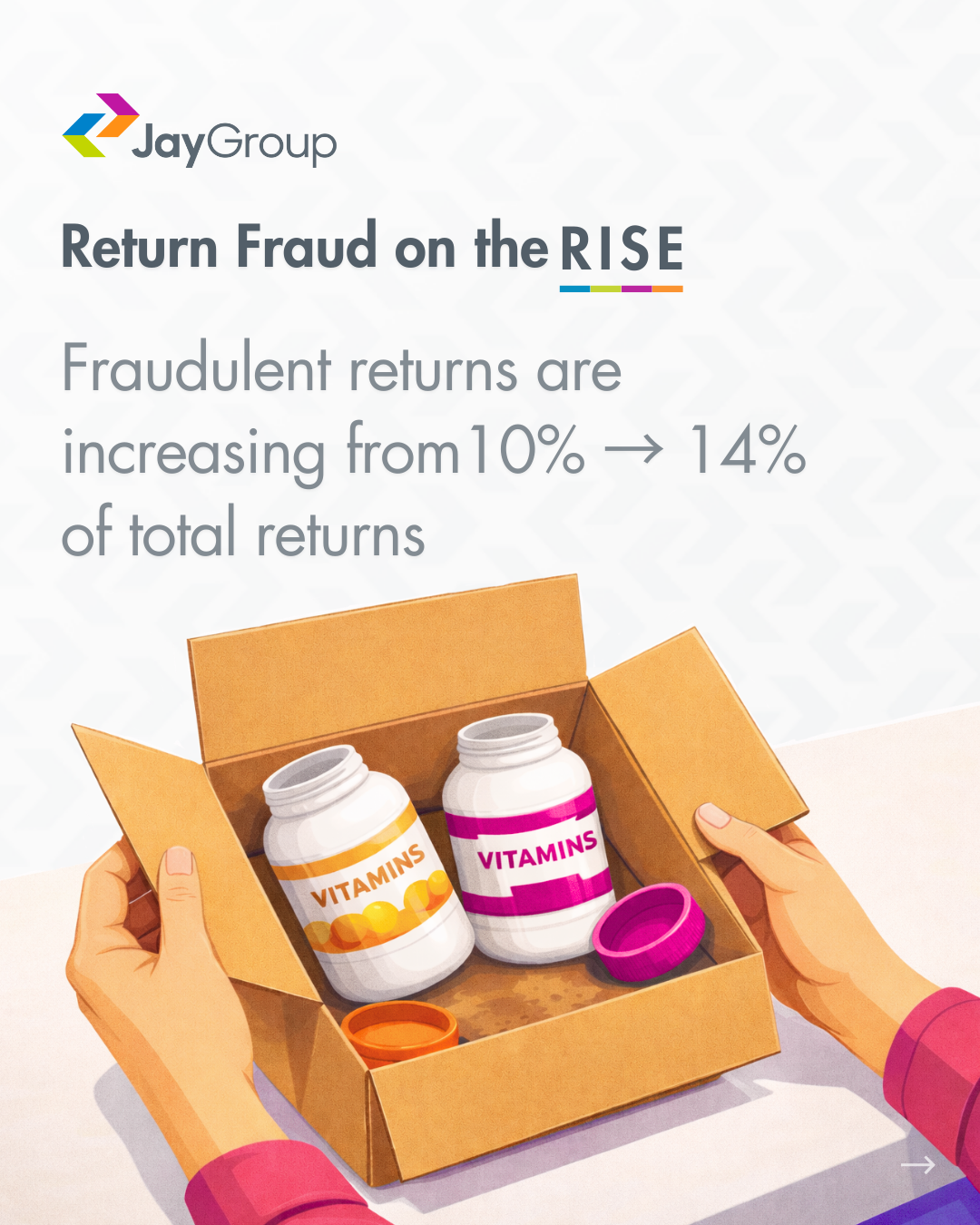
Other analyses found return fraud rising from about 10% to nearly 14% of returns within a year, with fraudulent return value jumping to roughly $102 billion.
On the ecommerce side, returns were already high before fraud enters the picture:
-
Average U.S. ecommerce return rates are around 16.9–18% of online orders.
-
Clothing (25%) and shoes (17%) are the most frequently returned online categories, according to Statista data cited in Jay Group’s returns article.
And worryingly, consumer surveys show policy abuse isn’t rare:
-
In data cited by Jay Group from Statista, 42% of men and 15% of women admitted lying about not receiving an online purchase, and more than a third of men and 16% of women admitted claiming an order arrived damaged when it hadn’t.
In other words: fraudulent returns aren’t a fringe issue anymore—they’re baked into the economics of ecommerce.
Return Frauds Examples
1. Return Frauds Examples: “Item Not Received” (INR) & Claims Fraud
Sometimes called “digital shoplifting,” these schemes exploit the fact that ecommerce brands often issue refunds quickly to keep NPS high:
-
The customer claims the package never arrived.
-
Or says the box was empty, missing items, or contained something else.
-
Or reports damage that doesn’t match carrier or inspection data.
-
In some cases, the customer receives a full refund but keeps the item, using a false non-delivery or “empty box” story as cover.
Recent coverage shows that a meaningful share of consumers—especially younger, higher-income shoppers—admit to falsely claiming non-delivery or returning empty packages at least once. Investopedia
2. Return Frauds Examples: Wardrobing and “Free Renting”
Wardrobing is simple and widespread:
-
Buy apparel, shoes, or accessories
-
Wear or use once (event, shoot, interview, trip)
-
Carefully re-tag or repack and return as “unused”
Reports suggest one in five consumers has engaged in some form of wardrobing, and several U.S. states treat it as a form of return fraud under theft or deception laws. In fashion categories—where online return rates can reach 30–40% for certain segments—wardrobing can quietly turn a profitable SKU into a money-loser.
3. Return Frauds Examples: Empty-Box, Decoy, and “Bricked” Returns
Here, the customer does send something back—but it’s not what you shipped:
-
The box is empty or filled with low-value items.
-
A cheaper product is returned in place of the original.
-
In electronics, key components are removed (“bricked”) before the item is sent back.
Without weight checks, serial-number scans, and solid inspection SOPs, these returns easily slip through, especially at post-peak volumes.
4. Return Frauds Examples: Label Swapping & Cross-Order Abuse
Label tampering is a growing concern in reverse logistics:
-
A fraudster uses one legitimate return label or RMA to send a different parcel—sometimes a cheaper product, sometimes nothing of value.
-
Or they generate multiple labels and return a single item against several orders or claims.
Jay Group’s ecommerce returns article highlights label tampering and fraudulent tracking as some of the most common patterns retailers report today, which is why their standard reverse-logistics programs build specific controls around label/RMA reconciliation.
5. Return Frauds Examples: Policy & Promo Abuse
Not all fraudulent returns involve a physical scam—some simply push your policies past their intent:
-
Cycling through multiple size/color “bracketing” orders with the expectation of unlimited free returns.
-
Using multiple accounts to repeatedly trigger “first-time purchase” or “free return” offers.
-
Returning old or heavily used items under a “lifetime guarantee” policy that was meant for genuine defects.
Individually, each case may look minor. At scale, in a high-volume ecommerce environment, they add up quickly.

Several forces are pushing return fraud upward:
-
Generous, low-friction policies
Free returns, no-questions-asked refunds, and long windows became standard during the pandemic. They drive conversion—but also create a wider attack surface. -
Higher overall return volumes
Online shoppers order multiple sizes and styles, knowing they can send some back. Returns are roughly three times higher in ecommerce than in physical retail, and fashion categories lead the pack. -
Normalization of “small” fraud
Media coverage shows a growing sentiment that a bit of return abuse is a harmless way to “get back at big retailers.” Social media often amplifies tips on how to game policies. -
Operational strain in reverse logistics
Many brands simply don’t have the tooling or bandwidth to inspect every return with equal rigor—especially during post-holiday spikes—making it easier for fraudulent returns to slip through.
How Return Frauds Shows Up in Your Operations
For ecommerce and omnichannel brands, fraudulent returns typically surface as a mix of data anomalies and floor-level headaches:
In Your Data
-
Return rates and refund volume rising faster than order growth in certain categories or regions
-
Outlier SKUs with unusually high “did not arrive” or “arrived damaged” claims
-
Clusters of returns from the same addresses, buildings, or freight-forwarding hubs
-
High refund rates with low physical returns (e.g., refunds processed before inspection)
On the Warehouse Floor
Jay Group’s reverse-logistics work highlights several recurring patterns:
-
Weight mismatches between expected parcel weight and what arrives
-
Returns that don’t match the RMA (wrong SKU, wrong quantity, wrong order)
-
Units that arrive in a condition inconsistent with stated reason codes (“unopened / unwanted,” but clearly used or missing components)
-
Serial abusers—accounts that generate a disproportionate volume of high-value returns, INR claims, or suspicious defects
Without clear SOPs, these show up as shrink, write-offs, and unexplained margin erosion. With the right process, they become signals you can use to adjust policy, risk rules, and product content.
Designing a Fraud-Aware Return Policy
The goal of the fraud-aware return policy isn’t to punish your best customers—it’s to discourage abuse and align costs with reality.
A fraud-aware policy should be:
-
Clear – Plain language, specific windows (“30 days from delivery”), and precise condition requirements (unworn, tags attached, seals intact).
-
Transparent – What’s free, what isn’t, how store credit vs. refund works, and how long refunds take after inspection.
-
Segmented – Shorter windows or stricter conditions for high-risk categories (event-driven fashion, limited drops, high-resale items).
-
Flexible for good customers – Loyal, low-risk customers can see more generous options; high-risk profiles may see tighter rules or store-credit-only outcomes.
Tactically, brands are experimenting with:
-
Refund-after-inspection for higher-risk scenarios
-
Return or restocking fees for low-margin items or heavy/bulky products
-
Exchange- or credit-first flows that preserve revenue while still feeling customer-friendly
The art is to explain the why: framing guardrails as a way to keep prices fair and options flexible for honest customers.
An Operational Playbook to Fight Fraudulent Returns
Policy is only half the story. The other half is in your reverse-logistics operation—whether it’s in-house or with a 3PL. Key building blocks, many of which Jay Group already bakes into its programs:
-
RMA-First Flows
-
Capture reason codes, photos, and disposition upfront.
-
Apply early fraud screening to suspicious patterns (high-value orders, repeated claims, etc.).
-
-
Weight & Tracking Reconciliation
-
Compare carrier weight data to expected carton weight.
-
Flag outliers (empty boxes, decoy items) for manual review before refund.
-
-
Standardized Inspection & Grading
-
Clear definitions of “new,” “like-new,” “refurbish,” and “scrap” by category.
-
Visual guides and training so inspectors apply the same standards.
-
-
Fraud Playbooks on the Floor
-
Documented steps for suspected fraud: when to escalate, when to deny a refund, when to flag an account.
-
Close the loop with CX so messages to customers are consistent and on-brand.
-
-
Feedback Loops Into Payments & CX
-
Feed warehouse fraud flags into your fraud stack or payment provider so future orders from repeat abusers get heavier screening.
-
Share reason-code and condition data with merchandising and CX to fix honest sources of friction (fit, packaging, product quality).
-
Fraud-Aware Reverse Logistics With Jay Group
Return fraud sits right at the intersection of payments, policy, and warehouse execution—and that’s where a 3PL partnership either helps or hurts.
Drawing from the same foundations as Jay Group’s ecommerce returns and reverse-logistics programs, a fraud-aware setup typically includes:
-
Integrated returns receipt & inspection
Dual-coast facilities (Lancaster/Mountville, PA and Reno, NV) process returns with SLAs that balance speed and accuracy—especially post-peak. -
Item-level data capture and fraud flags
Each returned unit carries reason codes, inspection results, and (when relevant) a fraud/suspicion flag that can be fed back to your systems. -
Process design that anticipates fraud
Standard workflows for label tampering, “empty box” scams, mis-shipped items, and policy abuse—so teams aren’t reinventing the wheel on every edge case. -
Coordination with your risk and CX stack
Operational realities on the dock inform front-end rules at checkout, return portals, and support—closing the loop between what customers say and what actually arrives. -
7-day, dual-coast capacity
Post-holiday or campaign-driven return waves can be processed without paralyzing forward fulfillment, which is often when fraud attempts spike the hardest.
The outcome is a returns operation that feels seamless to honest customers, but is engineered behind the scenes to protect your margins from fraudulent returns.
Bringing It All Together: Turning Return Frauds Into a Managed Risk
Return fraud and policy abuse are not going away, so for ecommerce brands the question is not “How do we eliminate it completely?” but “How do we make fraudulent returns harder, riskier, and less profitable—without punishing the customers we want to keep?” The brands that win treat return fraud as a core KPI that finance, CX, operations, and IT own together, use data across the full journey—from checkout to carrier to warehouse—to spot abuse patterns early, and design fraud-aware policies and reverse-logistics operations instead of simply adding harsher rules. They also expect their 3PL to act as a reverse-logistics and fraud-aware partner, not just a label printer. If fraudulent returns, claims, or suspicious patterns are starting to look like a mysterious line item on your P&L, it may be time for a deeper conversation: Jay Group helps ecommerce and omnichannel brands turn returns—and the fraud risk that comes with them—from a silent margin drain into a data-rich, managed part of the customer journey.
Frequently Asked Questions (FAQ) about Return Frauds
FAQ1: What are return frauds or fraudulent returns in ecommerce?
Return fraud (also called fraudulent returns) is the intentional misuse of a brand’s return, refund, or claims process to gain an unfair benefit. This includes keeping a product while receiving a refund, returning a different or damaged item, falsely claiming non-delivery or damage, wardrobing (wear-and-return), empty-box returns, and repeated policy abuse.
FAQ2: How common is return fraud in ecommerce today?
Return fraud is no longer a fringe issue. Industry data shows that fraudulent and abusive returns account for roughly 15% of all retail returns, representing over $100 billion in losses annually in the U.S. alone. Ecommerce return rates already average around 17–18%, making online brands particularly vulnerable to fraud at scale.
FAQ3: What are the most common types of fraudulent returns?
The most common return fraud types include false “item not received” (INR) claims, wardrobing, empty or decoy-box returns, returning lower-value substitute items, label swapping, and policy abuse such as repeated bracketing orders or exploiting first-time return promotions. Many of these schemes closely resemble legitimate returns, making detection difficult without strong controls.
FAQ4: Why are fraudulent returns increasing across ecommerce brands?
Fraudulent returns are increasing due to generous return policies, higher ecommerce return volumes, normalization of minor policy abuse, and operational strain in reverse logistics. Free returns and fast refunds improve conversion rates but also create more opportunities for fraud—especially during peak seasons when inspection capacity is stretched.
FAQ5: How can ecommerce brands detect return fraud in their operations?
Return fraud often appears through data anomalies and warehouse signals such as unusually high return or refund rates, repeated INR claims, mismatched parcel weights, returns that don’t match RMAs, and clusters of suspicious activity from the same accounts or addresses. Combining data analysis with standardized inspection processes helps surface these patterns early.
FAQ6: What is a fraud-aware return policy?
A fraud-aware return policy balances customer experience with risk control. It uses clear rules, transparent timelines, segmented policies for higher-risk items, and flexible treatment for trusted customers. Many brands apply refund-after-inspection, exchange- or credit-first options, and targeted return fees to discourage abuse without alienating honest buyers.
FAQ7: How does a 3PL help reduce fraudulent returns?
A capable 3PL supports fraud prevention by enforcing RMA-first workflows, reconciling parcel weights and tracking data, standardizing inspection and grading, and flagging suspicious patterns at the warehouse level. When reverse logistics data is fed back into customer service and fraud systems, brands can turn returns into a managed, measurable risk instead of a silent margin drain.